
DARK FANTASY & ROMANCE AUTHOR Nathan Wilson
Behind the Book: If I Remain
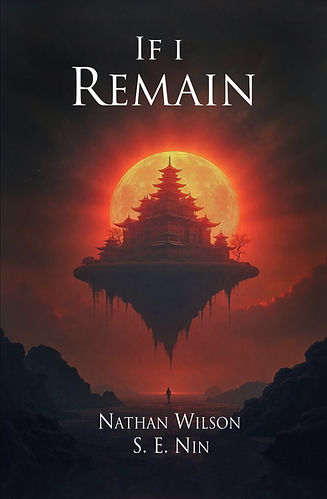
By this time, I'd spent years pouring myself into these books and trying to build something immersive and exciting. I believed I created a story that mattered, but belief doesn't travel far on its own. The audience I hoped for was only a fantasy, and I was left with a somber question. Who was any of this for?
I had been writing for 28 years, and the possibility crossed my mind that this might be where it ends. Instead of feeling defeated, I felt unrestrained. The story I envisioned would never make it past a literary agent or publisher without heavy censorship. Maybe not getting published was a blessing in disguise. If I Remain would be my death confession and love letter, a final entry that didn't ask to be embraced as much as it aimed to evoke. I wanted to push The Obsidian Blade series to the edge of art and create something readers would either love or hate, but at least they would be entertained. If this was my swansong, I wouldn't go quietly into the unknown.
I would rather explode.
"I would die to be your anything...
and I don't want to go on living as your nothing."
Love Letter, Death Confession
There was a chilling serenity to writing If I Remain from my proverbial death bed, in believing I might express everything I ever wanted to say. These would be unvarnished truths about love, hate, loss, and yearning as I experienced them. As a result, the usual boundaries around my storytelling dissolved. I worried less about how I will be perceived or if this will ruin my writing career. Nevertheless, I didn't write about sensitive subjects to seek attention or controversy. Every character arc was crafted with care, whether Mikoto was healing from trauma, Izanami was fighting the emotional pull of an abuser, or Shindara was falling deeper in love with her while still grieving his wife.
I wanted to give readers a story that is emotionally honest and hopeful against impossible odds. While many of my earlier works focused on death and identity, this story was about sustaining love and meaning in spite of suffering. I devoted a level of vulnerability to these arcs that I never attempted before. In doing so, it exposed something more personal akin to a meditation on death and other things ending. My writing crisis found its way into the narrative through Shindara. After his hand is mangled by Nura, he slowly loses his ability to write. There was something almost masochistic about detailing those scenes, about wondering whether Shindara, and by extension myself, was reaching the end of a creative life.
And if this is a farewell to my readers, then it is a love letter to another. There were moments when I was no longer writing solely as a storyteller but speaking directly to someone. Certain passages carry a second meaning beneath the surface, especially the dialogue between Shindara, Aya, and Mikoto. To any reader, they would appear as part of the narrative. For her, she will feel the echo of these conversations. Besides the many reasons I had for writing If I Remain, it was also my way of showing how closely I listened to her and how much I learned from her.

What I came to understand while writing this is how rare love truly is and how deeply it changes you. Not just romance but recognition between souls. The experience of finding someone who accepts you without ever needing you to be anyone else.
I leave this book behind as proof that she was here, and that she may live forever on these pages.

.jpg)
Written by published author Stephanie Youn, featured in the Survivor Showcase Art Exhibition.
Mental Health & Sexual Assault
Over the years, I've crossed paths with survivors of rape and abuse, and I've listened to their stories. I am saddened by how prevalent it is and that our systems don't do enough to punish predators and protect victims. Most of all, I mourn that some people blame themselves or think they somehow deserved what happened to them.
Around this time, my co-author challenged me to address Mikoto's origin story, how she was coerced into marrying someone she didn't love. Such arrangements were common in the Heian era among nobles. Historically, the Fujiwara clan arranged their daughters' marriages as a way of buying influence with the emperor. These elements laid the groundwork in the first book, but I never thought I would revisit this. Besides, Mikoto had always been wise beyond her years and indomitable. She didn't need more character development, or so I thought. I also worried I was the wrong voice to write about a woman's sexual trauma. It was the only aspect of this book that intimidated me, but if I approached this carefully, I could show how far Mikoto had come and say something meaningful in the process.
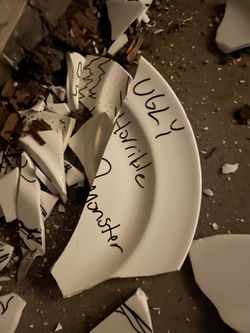
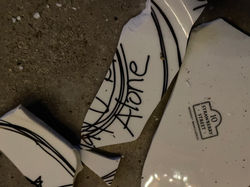
Writing Mikoto's journey in If I Remain was my way of paying tribute to survivors of sexual violence. For those who are suffering, I pray you find healing, peace, and hope. One survivor in particular inspired me with her strength and honesty about recovery. I wanted to give voice to her and everything she overcame, including a valuable lesson she taught me. Healing looks different for everyone. It can be slow, messy, torturous and nonlinear, and none of it is wrong. Mikoto became my way of saying what happened to you is not your fault. Your pain is valid.
And your anger should be allowed.
 |  |
|---|---|
 |  |
 |  |
 |  |
 |  |
 |  |
 |  |
 |
Nura: The Art of a Downard Spiral
Nura was always more than just the villain of this story. He was written as a critique of toxic relationships and the way they are romanticized. It would have been easy to write him off as a one-dimensional trope or the ex-husband who wouldn't let his wife go. Instead, I wanted to tap into the natural instinct that so many people feel for jealousy, possessiveness, and entitlement. In a way, I saw this as an opportunity to confront my worst behaviors, so I drew from my own capacity for jealousy and rage. At times, it felt wrong writing about this. There was a dangerous allure to becoming a personality like Nura and unfettering the ego, to see how deep this abyss goes. His descent became a catharsis even as I dissected myself on the page.
Nura also served as a rebuke of stories that both domesticate and vilify women. He draws heavily from Izanagi in Shinto creation mythology. In the legend, he blames his wife for a miscarriage and murders one of their children, yet he is revered as the god of purity. Even after her death, he abandons and traps her in the underworld. Still, he is viewed as the founder of marriage.
That paradox continues not just in myth but in modern storytelling and relationships. There is a tendency to glamorize jealousy and the morally gray. I wondered how far I could push it to the extreme and still make it romantic. Would one audience swoon for "touch her and everyone dies" or see through his attempts to manipulate and control? For me, Nura was a portrait of domestic abuse and ownership in relationships. Besides, what could be a scarier villain than a possessive stalking ex? This wasn't a subject rooted in myth or fantasy. It made me uncomfortable incorporating something so real and visceral. I wrote about this because I wish more could be done to spread awareness about abuse and prevent it from culminating in violence.
And a villain like Nura isn't meant to be redeemed or romanticized.

"Tyrant, etc.," a self-portrait I associated with the villain.

In Reflection:
Hopes and Regrets
A year has passed since I finished the series. I still miss it.
I miss exploring Japan through the lens of history, myth, and dark fantasy. I miss the haunted temples, the shores of the Yomi, the criminal underworld of Sakai, and the dream-like places I wish I could have spent more time in, especially Onogoro and Ukiyo Court. But most of all, I miss the characters.
For years, Shindara, Mikoto, Hachi, and others were more than characters to me. They felt like my companions. Sometimes, I leaned on Shindara when I was going through something personal, and even now I catch myself pondering what he would do in my place. When I need strength or wisdom, I wonder what Mikoto would say. In that way, they never really left me. They became the heroes I wish I had, Their journey had become a form of self-therapy as I navigated heartbreak and mental health. Writing about them helped me understand the kind of person I wanted to become. If I regret anything, it is perhaps that I lingered too long in the darkness at times, especially in The Abhorrent. I sometimes wonder if I should have allowed more room for joy, celebration, and romance in the original trilogy. I wish I had explored the potential of Ukiyo Court and let it turn into their sanctuary. Perhaps that is a story I can return to someday.
History in the Book
-
Minamoto no Yoshitsune wrote the Letter of Koshigo, although some scholars dispute its authenticity. In the book, Shindara writes it on his behalf. This letter was rife with frustration and despair before Yoshitsune professed his loyalty to his half-brother and future Shōgun, Yoritomo.
-
Yoritomo rejected his plea and launched a surprise attack instead. The Battle of Koromo took place on June 15, 1189, four years after the Genpei War ended. Lord Yoshitsune and his loyal retainer Benkei were betrayed by Fujiwara no Yasuhira, who acted under mounting pressure from the Shōgun.
-
Benkei famously died standing on a bridge during a last stand to protect his lord. After single-handedly fighting off a massive enemy force, Benkei was overwhelmed by a hail of arrows, but his corpse remained standing. Yoshitsune was forced to commit suicide, and his head was delivered in a cask of sake to the Shōgun.
-
There were rumors that Yoshitsune survived the siege and escaped rather than committing seppuku. One theory includes a possible escape to Hokkaido, where he changed his name to Okikurumi.
-
Shizuka Gozen, the mistress of Lord Yoshitsune, was indeed taken captive by the Yoritomo. She was forced to dance for him at the Hachiman Shrine in Kamakura. Rather than cooperate, she performed a mourning dance and sang about her undying love for Yoshitsune. Yoritomo was enraged, but his wife convinced him to spare Shizuka's life. The same could not be said for the child she was carrying, fathered by Yoshitsune. Yoritomo declared that if it was a son, he would be killed. Shizuka gave birth to a boy. Yoritomo feared that any son of Yoshitsune would grow up to seek revenge.